before the main story
Alien Infiltration Begins
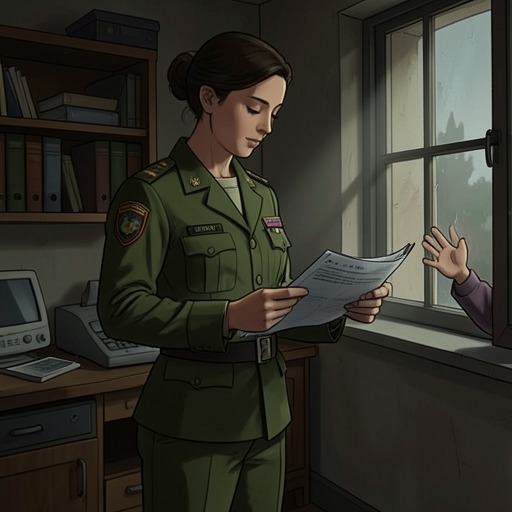
[Milotan](entity:concept-recall-concept-milotan-95e5941c34de) agents begin infiltrating [Earth](entity:location-recall-location-earth-a6b883af9147) as part of a long-term hostile project. Their society expects the operation to grow from scattered operatives into a vast covert presence before open action becomes possible.
The Greenes are among these agents, and their work embodies the tension between strategic colonization and the intimate demands of ordinary life.
eighteen years before the ending
The Greenes in Washington Heights
[May Greene](entity:character-recall-character-may-greene-ed6565f17d3f) and [Dan Greene](entity:character-recall-character-dan-greene-42dbaf481c88) assume human identities and settle in [Washington Heights](entity:location-recall-location-washington-heights-eb10a7c5c749), adopting ordinary names, clothing, furnishings, and habits. Their biological alterations include drastic adaptations intended to make their assignment permanent, leaving them alien even on [Milotis](entity:location-recall-location-milotis-bd586596505c).
Their apartment is deliberately banal, while their appearance remains subtly wrong beneath the disguise. Neighbors sense the difference without understanding it, establishing the social atmosphere of suspicion and misrecognition that will govern the family’s life.
during the Greenes' first decade on Earth
The Neighbors Speculate
The residents of the building repeatedly try to identify the Greenes’ indistinct accents and unexplained manner. [Mrs. Gottesmann](entity:character-recall-character-mrs-gottesmann-3a0740e7e1a3) searches for gossip, [Mrs. Schultz](entity:character-recall-character-mrs-schultz-f092878bbb2d) voices neighborhood judgments, and [Mrs. Danko](entity:character-recall-character-mrs-danko-ce9d59d40667) mutters about the [Evil eye](entity:expression-recall-expression-evil-eye-d90e05ec0fac) and later calls them [Changeling](entity:expression-recall-expression-changeling-ed638a102bcd).
Their suspicions never reach the truth. Instead, ordinary prejudice and superstition become accidental camouflage for the [Milotan](entity:concept-recall-concept-milotan-95e5941c34de) infiltration, allowing the genuine aliens to hide behind false explanations.
eighteen years before the ending
May Visits Dr. Robinson
After shopping in [New York City](entity:location-recall-location-new-york-city-65df0a129d4c), May returns from a consultation with [Dr. Robinson](entity:character-recall-character-dr-robinson-a8ad3c610482). Dan fears that she has contracted an [Earth](entity:location-recall-location-earth-a6b883af9147) disease, but she explains that the organic problem is a pregnancy rather than an illness.
The discovery is disastrous because the [Milotan](entity:concept-recall-concept-milotan-95e5941c34de) Bureau assigned Earth postings only to women believed sterile or past childbearing. Their unexpected pregnancy threatens their cover, finances, careers, and eventual status with the Bureau.
immediately after the pregnancy discovery
The Return Debate
Dan initially argues that the Greenes must return to [Milotis](entity:location-recall-location-milotis-bd586596505c), where the pregnancy could be treated properly and their failure would be judged. May refuses to end the pregnancy because she has always wanted a child and had accepted the [Earth](entity:location-recall-location-earth-a6b883af9147) assignment only after believing motherhood impossible.
The disagreement exposes the marriage’s shared burden: both agents are responsible, but May experiences the pregnancy as a long-denied fulfillment rather than merely a professional catastrophe.
immediately after the pregnancy discovery
Robinson Offers an Abortion
[Dr. Robinson](entity:character-recall-character-dr-robinson-a8ad3c610482) offers to terminate May’s condition without reporting it to [Milotis](entity:location-recall-location-milotis-bd586596505c). The proposal would preserve the Greenes’ assignment and remove the immediate danger, but May rejects it decisively.
Her refusal transforms the pregnancy from an embarrassing breach of protocol into a deliberate choice. The child becomes the center of a conflict between bureaucratic duty, marital loyalty, and May’s maternal longing.
shortly after the pregnancy discovery
The Permanent Cover Problem
Dan explains that raising a child on [Earth](entity:location-recall-location-earth-a6b883af9147) would require constant disguises, medical evasions, and eventually concealment from compulsory schooling and examinations. A tutor would attract attention and might require another [Milotan](entity:concept-recall-concept-milotan-95e5941c34de) to be exposed, while returning home would be difficult because their adaptations cannot simply be reversed.
The Greenes recognize that neither option is safe. Their biological disguise has protected their mission, but it also makes ordinary family life a logistical and emotional impossibility.
after the practical objections are raised
The Native-Born Agent Idea
May proposes that the child attend [Earth](entity:location-recall-location-earth-a6b883af9147) schools and grow up inside the local culture. She argues that a native-born [Milotan](entity:concept-recall-concept-milotan-95e5941c34de) would understand Earth intuitively and avoid the slips that trained adult agents constantly fear.
She further imagines young Milotan couples deliberately bearing children on Earth, creating a cheaper and faster generation of agents. The accidental pregnancy thus becomes a possible breakthrough for the entire [Milotan Earth Infiltration Program](entity:rule-recall-rule-milotan-earth-infiltrati-fc59c38bc494).
during the native-born agent debate
The Loyalty Objection
Dan warns that an [Earth](entity:location-recall-location-earth-a6b883af9147)-born child might identify with humans rather than with [Milotis](entity:location-recall-location-milotis-bd586596505c). Because children remain socially primitive for years, he fears that the child could become part of the human crowd before developing the mature hostility expected of a [Milotan](entity:concept-recall-concept-milotan-95e5941c34de) agent.
May counters that they have little to lose, and Dan finally agrees to try raising the child on Earth. Their decision is both a family commitment and an experiment in cultural engineering.
eight months later
Terence Is Born
[Terence Greene](entity:character-recall-character-terence-greene-144384db4c0a) is born on [Earth](entity:location-recall-location-earth-a6b883af9147) in the [United States of America](entity:location-recall-location-united-states-of-ame-69c4c3b5e06a). Unlike his parents, he has no alternate name and possesses a genuine Earth birth certificate, making him technically not a [Milotan](entity:concept-recall-concept-milotan-95e5941c34de) citizen even though his body is Milotan.
His birth creates a new category for the infiltration: an [Earth-born Milotan](entity:state-recall-state-earth-born-milotan-dc34f43ef556) who can possess authentic local documentation. The child is therefore both a vulnerable secret and a potential strategic asset.
infancy
Robinson Builds the Baby's Disguise
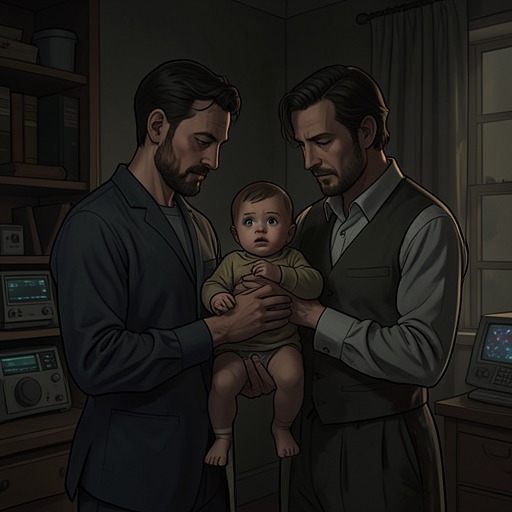
[Dr. Robinson](entity:character-recall-character-dr-robinson-a8ad3c610482) fits Terence with small plastic masks and contact lenses, adapting the concealment as the child grows. Because [Milotan](entity:concept-recall-concept-milotan-95e5941c34de) development is slower than human development, the disguises last somewhat longer, but they remain expensive and difficult to maintain.
The family’s finances deteriorate as May stays home to care for the child and loses her income. Their strategic experiment immediately imposes the material costs of hiding an alien body in a human society.
Terence's infancy and early childhood
May Raises Terence Alone
[Milotan](entity:concept-recall-concept-milotan-95e5941c34de) babies have the same noisy, degrading physical needs as human babies, although Milotan society would normally assign robots to care for them. On [Earth](entity:location-recall-location-earth-a6b883af9147), May must perform this work while Dan continues his human employment.
The arrangement deepens May’s exhaustion and ambivalence. She has wanted a child, yet the reality brings little of the pleasure she expected and forces the Greenes to abandon luxuries and eventually necessities.
Terence's infancy
The Roof-Star Excursions
May takes Terence outside daily in the [Earth](entity:location-recall-location-earth-a6b883af9147) sun and exchanges guarded pleasantries with neighbors who watch the building’s public spaces. At night she occasionally brings him to the roof to see the distant bright sun of [Milotis](entity:location-recall-location-milotis-bd586596505c).
She stops these nighttime visits when the neighbors become curious. Motherhood intensifies the need for secrecy, forcing May to suppress even the most private gestures of connection between Terence and his true home.
Terence's first years
The Neighborhood Calls Him Puny
Terence grows slowly by human standards, walking at two and speaking at three. The neighbors interpret his development as backwardness, while May must silently accept their judgment even though he is normal for a [Milotan](entity:concept-recall-concept-milotan-95e5941c34de) child.
May herself begins to absorb human assumptions after years on [Earth](entity:location-recall-location-earth-a6b883af9147). The episode shows cultural conditioning working in both directions: the child is mistaken for a defective human, while his mother increasingly experiences him through human categories.
Terence's early childhood
May Spoils the Child
May alternates between resentment, guilt, and indulgence. She sometimes questions whether the child was worth the trouble and regrets refusing [Dr. Robinson](entity:character-recall-character-dr-robinson-a8ad3c610482)’s offer, then compensates by giving Terence things he wants even when they are bad for him.
Her conflicted affection makes Terence more than a mission asset. He becomes the emotional test of the Greenes’ alien identity, exposing desires and weaknesses their training was designed to suppress.
when Terence begins speaking
The Parents Conceal the Truth
May and Dan teach Terence both English and [Milotan](entity:concept-recall-concept-milotan-95e5941c34de), explaining only that they come from a far-off place. Dan wants him told the truth early so he will not identify with humans, but May believes his alien origin can wait.
They keep him away from other children as much as possible and warn him not to speak Milotan in public. Their attempt to preserve his future usefulness paradoxically delays the knowledge needed for him to understand his own body and isolation.
when Terence is six
Terence Enters School
[Compulsory School Attendance Law](entity:rule-recall-rule-compulsory-school-attend-1c4711ef44e7) makes home education impossible, so May enrolls Terence in a private day school. She tells the principal that the Greenes are [Christian Scientists](entity:organization-recall-organization-e98664d671e5) and therefore cannot permit medical examinations.
The school offers academic protection and social danger at once. Terence can perform well without appearing exceptional, but daily contact with human children threatens the separation on which the family’s security depends.
Terence's first day of school
The First School Day
May waits anxiously for Terence and searches his masked face for signs of distress. He reports that school and the other children were merely all right, giving his mother no reassurance beyond the absence of visible disaster.
His questions reveal that he has misunderstood the masks and lenses as something all adults wear. When May tells him that only the Greenes use them, his awareness of difference begins to form.
after Terence's first school day
The Russian Cover Emerges
Terence repeats that [Mrs. Gottesmann](entity:character-recall-character-mrs-gottesmann-3a0740e7e1a3) suspects the family came from [Russia](entity:location-recall-location-russia-8ee8be401081). May realizes that the neighbors have been studying the Greenes more closely than she believed, but she also sees opportunity in their mistaken suspicion.
Dan decides they should allow the Russian story to stand, implying a Balkan origin and political relatives left behind. Human xenophobia becomes an additional layer of cover for the [Milotan](entity:concept-recall-concept-milotan-95e5941c34de) operation.
shortly after Terence starts school
The Neighborhood Confrontation
The neighbors question May about the cost of private school and criticize her for protecting Terence from public-school dangers. [Mrs. Danko](entity:character-recall-character-mrs-danko-ce9d59d40667) snarls “Commissars!” and makes a gesture against the [Evil eye](entity:expression-recall-expression-evil-eye-d90e05ec0fac), reinforcing the neighborhood’s confused suspicions.
May remains outwardly conciliatory, while Dan recognizes that Terence is already proving useful as camouflage. The child’s presence gives the adults’ evasiveness a plausible human explanation.
a few weeks after school begins
The Parents Attempt Disclosure
After Terence settles into school, May and Dan decide he should finally learn the truth. Dan tells him that they come from another solar system and that their home is a planet among the stars.
Terence rejects the revelation as a joke because [Miss Chase](entity:character-recall-character-miss-chase-64741c961d5d) has taught him that extraterrestrials and space travel are nonsense. His faith in his teacher proves stronger than his parents’ testimony, demonstrating how quickly [Earth](entity:location-recall-location-earth-a6b883af9147) culture has begun to shape him.
immediately after the attempted disclosure
Terence Chooses Earth
Terence insists that the family is Russian rather than extraterrestrial and repeats [Miss Chase](entity:character-recall-character-miss-chase-64741c961d5d)’s view that [Russia](entity:location-recall-location-russia-8ee8be401081) contains good people despite its government. May and Dan are forced to laugh at the absurdity of their situation and consider studying Russian to support the cover.
The incident confirms Dan’s fear that Terence is identifying with human society. Terence does not merely fail to understand [Milotis](entity:location-recall-location-milotis-bd586596505c); he actively treats his parents’ culture as childish fiction.
Terence's school years
Human Education Deepens
Terence adapts remarkably well to school, bringing home an occasional friend while his parents discourage close juvenile contacts. They compensate by taking him to theaters, museums, and the zoo, trying to prevent him from noticing how isolated he is from children his own age.
His progress is good but deliberately unremarkable. The Greenes preserve the strategic ideal of an inconspicuous family, even as the effort drains their money and confines Terence’s social world.
during Terence's school years
The Satellite Dispute
When [Russia](entity:location-recall-location-russia-8ee8be401081) launches its first satellite, May and Dan hope the achievement will make Terence question [Miss Chase](entity:character-recall-character-miss-chase-64741c961d5d)’s dismissal of space travel. Miss Chase instead calls the satellite Russian propaganda, and Terence remains committed to her Earthbound worldview.
The event gives the parents a chance to validate [Milotan](entity:concept-recall-concept-milotan-95e5941c34de) knowledge, but human ideology absorbs even the evidence that might have opened Terence’s mind. His schooling continues to turn him away from his origins.
after the satellite launch
Milotan Lessons Fail
May and Dan try to teach Terence [Milotan](entity:concept-recall-concept-milotan-95e5941c34de) geography, history, and language. He treats the lessons as jokes, becomes embarrassed by Milotan, and finally refuses to speak it, calling it “silly old Esperanto.”
Dan sees this as unmistakable cultural identification with humans, while May insists that Terence will eventually have to face his difference. The family’s educational struggle becomes a contest between inherited identity and lived belonging.
late in Terence's school years
The Family Faces Expenses
Terence’s education grows increasingly expensive, with charges for French and other extras. Dan complains that he has been waiting years for the Bureau to acknowledge Terence and provide an allowance, while May urges patience.
The financial pressure sharpens the strategic stakes. Terence is being trained by circumstance in the culture he may serve, but the Bureau still regards him as an unrecognized liability rather than an official asset.
later in Terence's school years
The Swimming Lesson
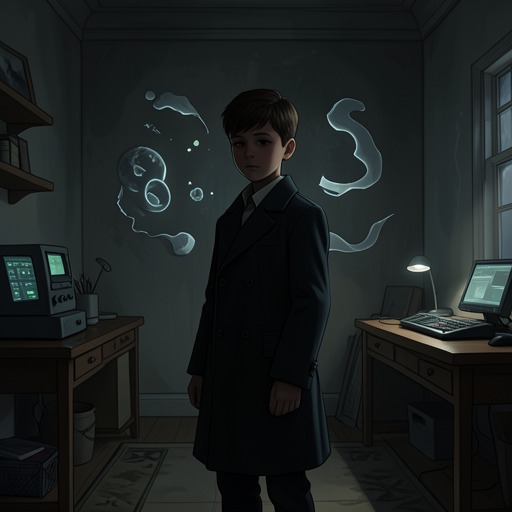
The school introduces swimming lessons, requiring Terence to appear unclothed before the other children. His masks and coverings cannot conceal his alien anatomy in that setting, and he collapses in distress afterward.
The danger the Greenes had anticipated finally arrives through an ordinary school requirement rather than a medical examination. Terence’s body becomes the undeniable evidence that his parents have tried to keep hidden.
immediately after the swimming lesson
Terence Accuses May
May finds Terence crying through his opaque contact lenses and asks what happened. He tells her that he is different, turning the statement into an accusation against her and Dan for making him alien and failing to explain what that meant.
The exposure breaks the emotional distance between mother and child. For the first time, Terence’s alien identity is not an abstract family secret but a source of personal shame and anger.
the same afternoon
The Principal Misreads the Evidence
The principal confronts May, accusing her of enrolling a freak without warning the school. She interprets Terence’s body as evidence of radiation damage from bomb testing and imagines a government cover-up threatening ordinary families.
May is relieved that the principal’s fear remains trapped inside human assumptions. Mutation and fallout provide a stronger explanation to the school than extraterrestrial biology, allowing the secret to survive another crisis.
the same afternoon
The School Expels Terence
The principal says Terence cannot remain at the private school because the swimming incident has caused a horrifying scene. She urges May to disclose his condition to authorities at any future school and insists that officials want to help rather than harm him.
May agrees to move to the suburbs, presenting the transfer as protection for Terence. She privately understands that the school’s compassion is merely another form of misrecognition, but it preserves the family’s cover.
during the drive home
Terence Asks About Milotis
After leaving the school, Terence clings to May’s hand and asks in halting [Milotan](entity:concept-recall-concept-milotan-95e5941c34de) whether [Milotis](entity:location-recall-location-milotis-bd586596505c) truly exists. He wants to know whether his parents have been telling the truth and whether there is a place where people look like them.
The humiliating exposure has achieved what parental explanations could not. Terence’s alien origin becomes credible because his experience has made human normality impossible for him to inhabit comfortably.
near the ending
The Report to Milotis
May tells Terence that she and Dan did not invent [Milotis](entity:location-recall-location-milotis-bd586596505c) and promises to explain everything at home. She also says that they will send a beam to Milotis that night to report his existence.
The report marks the conversion of the accidental child into an official experiment and potential agent. Terence’s [Earth](entity:location-recall-location-earth-a6b883af9147) birth, cultural experience, and public exposure together offer the Bureau the proof May always hoped would redeem the Greenes and transform its strategy.